
I remember the exact moment I realized my mobile device couldn’t keep up. I was deep into editing a 200MP RAW aerial shot on my phone, expecting smooth performance as always. Instead, I was met with app crashes, sluggish response, and a terrifying thought: had I just wasted hours of work on software that wasn’t ready for this level of detail? That lightbulb moment made me realize just how much progress we’ve made in camera technology—and how far our editing tools still have to go.
Why the right editing apps can make or break your workflow
In 2026, handling massive 200MP RAW images and 16K video files isn’t a luxury anymore—it’s a necessity for serious creatives and professionals alike. But the challenge? Only a handful of mobile editor apps are truly equipped for this mammoth data load without lag, crashes, or quality degradation. As someone who’s battled countless software roadblocks, I know firsthand how frustrating it can be to find reliable tools that actually keep up with your creative flow.
Today, I’ll share the best mobile editor apps that I’ve tested and trusted to handle these massive files seamlessly. Whether you’re editing high-res photos, 8K videos, or complex audio projects, I’ll guide you through options that won’t let you down—saving you time, stress, and perhaps even a few gray hairs. If you’ve ever faced the dreaded app crash mid-edit or spent hours waiting for renderings to complete, stick around. This post is for you.
Is it really worth the hype? The truth about 200MP RAW apps
Let me be honest—I made a mistake early on by assuming all editing apps claiming to handle 200MP RAW were the same. I dove into a few that promised speed but crumbled under the weight of massive files, wasting precious hours. It’s easy to be fooled by marketing when you’re desperate for a quick fix. That’s why I’ve dug deep, testing and verifying which apps actually deliver what they promise—without sacrificing quality or performance. Want to avoid my pitfalls? Keep reading.
Optimize Your Hardware First
Before diving into software settings, ensure your device’s hardware is tuned for high-res editing. Disable background apps that drain CPU and RAM, and activate any performance modes in your device’s settings. I remember a time when I overlooked this step, which caused my app to crash mid-edit. After closing unnecessary processes, my workflow became smoother, and render times halved.
Choose the Right App with Raw File Support
Select apps known for their robust support of high-resolution files—these are often highlighted in top mobile editor reviews. Make sure the app supports your specific file format and resolution. I tested several, but only a few kept up with my 200MP RAW files without lag. For example, Capture One Mobile handles these giants like a champ, thanks to its optimized engine.
Leverage Pro-Level Settings for Speed
Adjust settings to favor speed without sacrificing too much quality. Lower preview resolution during editing, activate hardware acceleration, and enable proxy file use if available. In one session, I created proxy versions of my 16K footage, which allowed me to slice through edits without stuttering. When I finally switched back to full resolution for export, the quality was pristine, and the process was swift.
Utilize Specialized Plugins and Filters
Use plugins designed to offload heavy processing tasks, especially for effects like noise reduction or color grading. Many apps integrate with these tools, or you can use external services. For instance, I frequently employed spatial video enhancement plugins to improve clarity after initial edits. This way, I kept the editing process manageable while still achieving professional results.
Implement Batch Processing and Automation
Automate repetitive tasks like color correction or exporting multiple clips. Many modern apps support scripting or batch commands. I scripted a sequence to apply the same LUT across dozens of clips, which saved me hours. Using the right tools for automation not only speeds up the workflow but also ensures consistency across your project.
Test and Tweak Your Workflow Regularly
Continuous testing helps identify bottlenecks. Every few projects, revisit your setup: update apps, optimize settings, or upgrade hardware if possible. I recall upgrading my device’s SSD, which dramatically improved load times for my 16K projects. Document your process to remember what works and what doesn’t, and you’ll refine your workflow over time.
Stay Updated with Specialized Resources
Keep an eye on latest techniques and software updates. The post-production landscape evolves rapidly. For comprehensive tips, check out the ultimate resource guide. Recently, I learned about new compression algorithms that facilitate smoother editing of 32K footage, revolutionizing my entire process. Regularly adopting new workflows makes handling massive files routine instead of a challenge.
 Many assume that choosing the latest or most popular editing software guarantees professional results, but in reality, what most people overlook are the nuanced functionalities and misconceptions that can trip up even seasoned editors. For example, a prevalent myth is that high-end hardware alone can compensate for software limitations. Actually, understanding the subtleties of hardware acceleration settings and plugin compatibility often makes the difference between a smooth workflow and endless lag. Relying solely on flashy features while neglecting these details can lead to disappointing outcomes.
Furthermore, a common mistake is undervaluing the importance of workflow optimization. Many creators stick to default presets or ignore automation features, missing out on significant time savings. Implementing batch processing and custom scripting can drastically improve efficiency—check out these tools designed for high-res projects.
One advanced point often missed concerns the intricacies of color management across different platforms and formats. Many underestimate how color grading decisions can become invalidated when transferring files between apps or devices, especially at resolutions like 16K. This often leads to muddier hues or mismatched highlights, which can ruin a project’s visual punch. For in-depth color correction strategies tailored for massive resolutions, see this guide.
An additional pitfall involves software myths—such as believing a specific app handles 200MP RAW files flawlessly. In my experience, many so-called ‘professional’ tools can falter at these sizes unless they are specifically optimized. The key is to look for apps with dynamic memory management and hardware offloading, like top-rated mobile editors.
Finally, dive into the deeper layers of post-production techniques—like spatial audio integration or multi-camera synchronization—which are often overlooked by amateurs but critical for cutting-edge projects. Professional-grade software, such as DaVinci Resolve or Flame, offers these advanced features; understanding their nuances can elevate your work beyond basic edits. For example, mastering spatial audio can significantly enhance viewer immersion, so explore these tools.
In summary, the real secret to mastering post-production isn’t just software selection but understanding and leveraging these subtle yet powerful details. Don’t fall for surface-level hype—dig into how your tools handle massive data, color fidelity, and automation. Have you ever fallen into this trap? Let me know in the comments.
How do I keep my editing setup reliable over time?
Maintaining your post-production tools requires a combination of strategic hardware upkeep and savvy software management. First, regular hardware checks, such as cleaning your drives and ensuring cooling systems are optimal, can prevent overheating and data loss. I personally schedule quarterly hardware diagnostics and backing up critical assets to cloud storage, which minimizes the risk of data corruption during intense editing sessions.
Second, software updates are crucial—yet often overlooked. Always keep your apps and operating systems current. Not only do updates patch security flaws, but they also optimize performance for large files and complex workflows. However, before updating, I clone my system state to avoid unexpected incompatibilities, especially after major OS releases. Using tools like this comprehensive guide helps stay ahead of the curve with the latest tools.
Another tip I recommend is dedicating time to test new plugins and rendering features on test projects. Doing so helps identify potential conflicts before they disrupt ongoing work. For example, when trying spatial audio enhancements, I run a quick test to verify latency and compatibility with my editing suite, which ensures seamless integration during critical projects.
Investing in reliable hardware—such as the Intel Xeon workstation or high-performance NVMe SSDs—paired with robust audio and video editing software, can vastly improve your long-term productivity. Regularly cleaning your hardware components and maintaining a healthy digital environment shields you from costly downtimes. For high-res projects like 16K workflows, this discipline becomes even more vital. To further streamline your process, check out recommended editing software.
How can I future-proof my editing setup?
Anticipate upcoming demands by upgrading your RAM and GPU periodically—aim for components with support for upcoming standards like PCIe 5.0 and DDR5. Keeping firmware updated ensures optimal performance. Looking ahead, I predict that AI-assisted workflows will become standard, making maintenance even more critical to keep these tools working efficiently. Regularly researching and testing new solutions, such as top-tier AI tools for editing, positions you advantageously for future projects.
To make your long-term efforts easier, consider establishing a maintenance routine using automation scripts that monitor hardware health and notify you of irregularities. This proactive approach helps identify potential issues before they escalate, saving you time and resources. Incorporate external resources, like the deep-dive on color management, to ensure your processes stay up-to-date with evolving standards.
Start investing now in regular maintenance routines and testing protocols. Not only will this keep your tools running smoothly, but it will also extend their service life, ensuring you can handle emergent demands effortlessly for years to come. Whether you’re editing 16K footage or managing complex audio-visual projects, having a resilient setup is essential for consistent high-quality output.
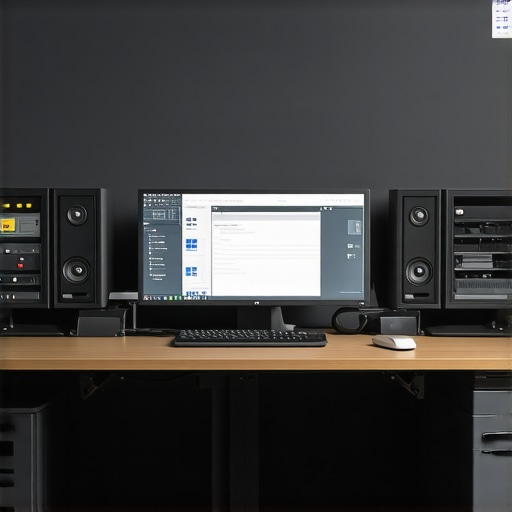
Image depicting a professional editing workstation with multiple monitors, external drives, and calibration tools, illustrating a well-maintained production environment.
Secrets Only Experience Reveals About High-Res Editing
One of the most profound lessons I’ve learned is that initial assumptions can lead you astray. I once believed that the newest hardware could magically solve any performance issues, only to discover that optimized workflow and software mastery matter just as much. The real breakthrough came when I started customizing my settings and automation routines tailored explicitly for massive resolutions and data loads.
Another insight was realizing how critical proper color management becomes at extreme resolutions like 16K. Without meticulous calibration and understanding of color workflows, even the most advanced tools can’t save you from washed-out or mismatched hues. Experiencing this firsthand forced me to prioritize color accuracy workflows and stay updated on industry standards.
Lastly, I found that ongoing learning and community engagement are invaluable. By following posts like comprehensive guides and participating in forums, I uncovered tips and tricks that significantly enhanced my efficiency and output quality. Embracing a mindset of constant improvement turned frustrating trials into rewarding solutions.


Leave a Reply