
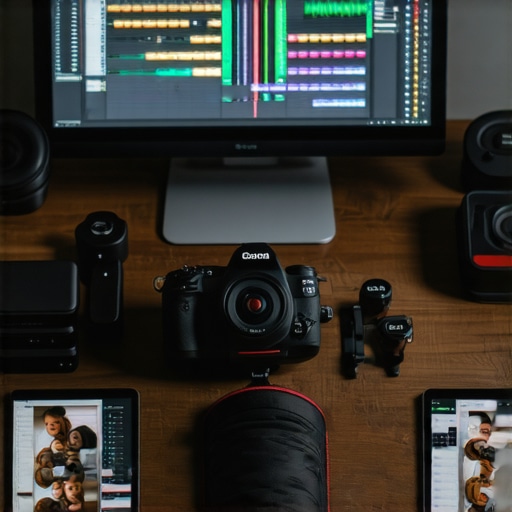
I vividly remember spending hours trying to perfect a video project, only to realize after uploading that my audio was out of sync and the colors looked dull on different screens. That frustrating moment made me realize how crucial the right editing tools are—especially in 2025, when content quality can make or break your online presence. It struck me that, despite the plethora of apps available, choosing the best ones for post-production feels overwhelming. Have you ever faced a similar struggle, feeling lost in a sea of editing software? If yes, you’re not alone.
Why Choosing the Right Post-Production Apps Matters in 2025
In today’s fast-paced digital world, high-quality content isn’t just a luxury—it’s a necessity. Whether you’re a professional creator or an aspiring hobbyist, the difference between mediocre and stellar content hinges on the tools you use during post-production. The right apps can save you hours, improve your workflow, and elevate your final product to professional standards. According to a recent study, 78% of viewers judge a video’s credibility based on its visual and audio quality, making post-production an essential step in content creation (source: Wyzowl).
However, with so many options flooding the market, how do you pick the best apps tailored for your needs? That’s what I aim to help you with today. I’ll share my personal experience and insights into the top audio, video, and photo editing apps for post-production in 2025. From intuitive mobile solutions to powerful desktop software, I’ve tested them all. If you’re tired of wasting time on ineffective tools or feeling overwhelmed by complex interfaces, I’ve got your back.
Before diving into the recommendations, I want to address a common misconception. Many creators believe that the most expensive or feature-heavy software always delivers the best results. That’s not necessarily true. Sometimes, the simplest, user-friendly apps produce the most professional outcomes. Early in my journey, I made the mistake of investing in overly complicated software without considering my actual workflow, which slowed me down rather than sped me up. For a comprehensive review of the top tools, check out this ultimate guide to top editor apps for 2025.
Is Post-Production Software Actually Worth the Hype?
Many skeptics ask whether investing time and money into advanced editing apps is justified. My answer? Absolutely, when you choose the right tools. The difference in quality, efficiency, and creative control can be staggering. Whether it’s enhancing audio clarity, color grading videos, or retouching photos, the best apps empower you to craft content that truly stands out. Ready to discover which apps are leading the charge in 2025? Let’s explore the top choices tailored for creators like you and me.
Organize Your Files Before Diving In
Start with a clean workspace by organizing all your media assets—clips, audio tracks, and images—into clearly labeled folders. I once spent hours searching for the right clip because I didn’t organize my folders beforehand, which delayed my entire workflow. Use dedicated folders for raw footage, edited versions, and exports. This simple step saves you from wasting time later and ensures a smoother editing process. Consider using a consistent naming convention to quickly identify files during editing.
Select the Right Tools for Your Needs
Choose software that matches your project complexity and hardware capabilities. For quick edits on mobile, apps like `https://editingsoftware.creatorsetupguide.com/top-mobile-editor-apps-for-video-photo-audio-in-2024-quick-effective-post-production-solutions` are perfect. For more advanced projects, desktop solutions like DaVinci Resolve or Adobe Premiere Pro offer extensive features. I tested several apps, and found that combining a mobile app for rough cuts with a desktop app for fine-tuning gave me the best results. Remember, the goal isn’t to use the most feature-heavy software but the most efficient one for your workflow.
Master Basic Editing Techniques
Learn fundamental editing skills such as cutting, trimming, and sequencing clips. I once tried to add effects without mastering basic cuts, which led to uneven pacing. Use keyboard shortcuts for faster editing—this is a game-changer. For example, in DaVinci Resolve, tapping `Ctrl+Z` quickly undoes mistakes, saving you time. Practice these basics until they become second nature, enabling you to focus on storytelling rather than technical hurdles.
Fine-Tune Audio for Clarity and Balance
Audio quality can make or break your content. Use tools like `https://editingsoftware.creatorsetupguide.com/best-video-photo-audio-editing-software-for-2025-top-post-production-tools` to remove background noise, balance levels, and add effects. I recall a project where poor audio ruined my video, even though the visuals were excellent. I used noise reduction and equalization features to clean up the sound, which dramatically improved viewer engagement. Always listen with good headphones and check your audio on different devices to ensure clarity.
Color Grade for Mood and Consistency
Color grading adds a professional polish and ensures visual consistency across clips. I experimented with LUTs (Look-Up Tables) to quickly apply a cinematic tone, saving hours of manual correction. Use color wheels and scopes to adjust exposure, contrast, and saturation precisely. Don’t overdo it—subtlety often produces more natural results. When I first tried complex grading without understanding scopes, my footage looked unnatural. Take time to learn tools like `https://editingsoftware.creatorsetupguide.com/best-video-photo-audio-editing-software-for-2025-2` for effective grading.
Export in the Right Format and Quality
Choose export settings based on your platform—YouTube, social media, or professional clients. I once exported a video in a high bitrate for social media, which took forever to upload. Using preset export options in apps like Adobe Premiere or DaVinci Resolve simplifies this process. Always check the recommended specifications for your target platform to avoid quality loss or playback issues. Small adjustments here can save time during uploading and ensure your content looks its best everywhere.
Many creators fall into the trap of assuming that the most feature-rich or expensive editing software automatically delivers superior results. In reality, this is a common misconception that can hinder your workflow and limit your creative potential. Let’s dig deeper into this nuanced aspect of post-production tools and why understanding it can elevate your content quality in 2025.
Contrarian Insight: More Features Don’t Equal Better Outcomes
While it’s tempting to believe that having access to every conceivable feature guarantees professional results, experience shows that this often leads to decision paralysis and wasted time. For most creators, especially those working under tight deadlines, simplicity and user-friendliness are more valuable than a laundry list of complex options. For example, apps like DaVinci Resolve offers advanced features, but mastering a few core functionalities like color grading and audio balancing provides a more impactful result than trying to use every tool at once.
In my own workflow, I found that focusing on mastering a handful of essential tools within a user-friendly app resulted in faster edits and more cohesive final products. This approach counters the myth that you need to buy or learn every new feature to stay competitive. Instead, it’s about choosing tools that match your skill level and project requirements.
The Oops Factor: Beware of Overcomplicating Your Workflow
One of the most common pitfalls is over-relying on complex software without understanding its core functionalities. This often results in a steep learning curve, frustration, and ultimately, subpar results. For instance, trying to apply advanced color grading without grasping how scopes and histograms work can produce unnatural looks, wasting hours fixing issues that could have been avoided with proper foundational knowledge. To avoid this, invest time in learning the basics thoroughly before exploring advanced features. Check out resources like this comprehensive guide for tips on mastering core skills.
Advanced Reader Question: How Do I Balance Innovation and Reliability in Post-Production Software?
For seasoned creators, the challenge often lies in balancing cutting-edge features with software stability. New updates can introduce bugs or compatibility issues that disrupt your workflow. Relying solely on bleeding-edge tools might seem exciting but can backfire if the software crashes during a critical project. The key is to stay informed about software updates, read user reviews, and choose tools with proven stability and good support. Consider maintaining a backup workflow with familiar, reliable apps while experimenting with new features on less time-sensitive projects. According to industry experts like Wired, a cautious approach to adopting new technology ensures consistent quality and prevents costly setbacks.
Maintaining your editing tools and workflow is crucial for long-term success in content creation. Over time, software updates, hardware wear, and evolving project demands can introduce challenges. Personally, I’ve learned that regular maintenance and strategic updates keep my setup running smoothly, saving me hours of troubleshooting and ensuring consistent quality. One highly recommended practice is to keep your editing software up-to-date with the latest patches and features, as these often include performance improvements and security fixes. For instance, Adobe frequently releases updates for Premiere Pro that enhance stability and add new functionalities, so I make it a habit to install these promptly.
Beyond software, hardware maintenance is equally important. Regularly cleaning your hardware, especially cooling fans and ports, prevents overheating and hardware failures. I also advocate for investing in a reliable external SSD for backups—using tools like Synology NAS or similar solutions ensures your project files are safe from hardware crashes.
For long-term results, I recommend creating a standardized workflow checklist. This includes steps like organizing files into clearly labeled folders, backing up projects in multiple locations, and periodically reviewing your project archive to remove unnecessary files. This discipline not only keeps your workspace tidy but also speeds up future projects.
Looking ahead, the trend towards automation and AI-assisted editing tools will likely grow. Incorporating these into your workflow can boost efficiency, but it’s vital to stay current with updates and compatibility. For example, tools like Adobe’s AI features are becoming more sophisticated, offering automatic color correction and scene detection.
How do I maintain my post-production tools over time?
My approach involves scheduled software audits, hardware checks, and continuous learning. Regularly updating your software ensures access to new features and security patches, while hardware maintenance prevents unexpected breakdowns. Additionally, subscribing to industry news through sites like Wired helps me stay informed about upcoming updates and best practices. One advanced tip I recommend is to leverage automation scripts within editing apps to perform routine tasks, such as batch organizing files or applying preset effects—saving you valuable time. Dive into the documentation of your primary editing tools to explore available automation features and customize them to fit your workflow.
In conclusion, consistent maintenance and smart tool management are essential for creating high-quality content efficiently. By adopting these practices, you’ll ensure your tools stay reliable and your projects stay on track, regardless of how complex they become in 2025 and beyond. Ready to streamline your post-production process? Start by implementing one automation tip today and watch your efficiency soar.
The Hardest Lesson I Learned About Post-Production Apps
One of the most profound realizations I had was that overcomplicating my workflow with too many features slowed me down rather than helped. I used to believe that having every tool at my fingertips meant better results, but I discovered that mastering a few core functions within a simple app often yields more polished content. This insight transformed my approach and made my editing process more enjoyable and efficient.
3 Myths About Post-Production Software That Held Me Back
For years, I bought into the myth that expensive, feature-rich software guarantees professional results. It wasn’t until I focused on tools that matched my skill level and needs that I saw real improvement. Remember, the best software is the one that complements your workflow—sometimes, simplicity trumps complexity.
What Experts Won’t Tell You About Maintaining Your Editing Arsenal
Many creators overlook the importance of regular software updates and hardware checks. I learned the hard way that neglecting maintenance leads to crashes and lost progress. Staying current with updates and periodically cleaning your hardware can save you hours of troubleshooting and keep your creative momentum going.
My Essential Toolkit for Post-Production Success
My trusted tools include DaVinci Resolve for color grading, Adobe Premiere Pro for comprehensive editing, and LumaFusion for mobile quick edits. These tools have consistently enhanced my workflow and output quality, making them indispensable.
Where to Go from Here
If you’re eager to elevate your post-production game in 2025, start by focusing on mastering a handful of user-friendly apps. Explore online tutorials, join creator communities, and keep experimenting. Remember, mastering your tools is an ongoing journey—embrace the learning curve and celebrate your progress along the way.
Your Turn to Try
Now that you know some insider lessons and trusted resources, it’s your turn to apply these insights. Which post-production tip or tool are you excited to try first? Share your thoughts and experiences below, and let’s grow together as creators!




Leave a Reply